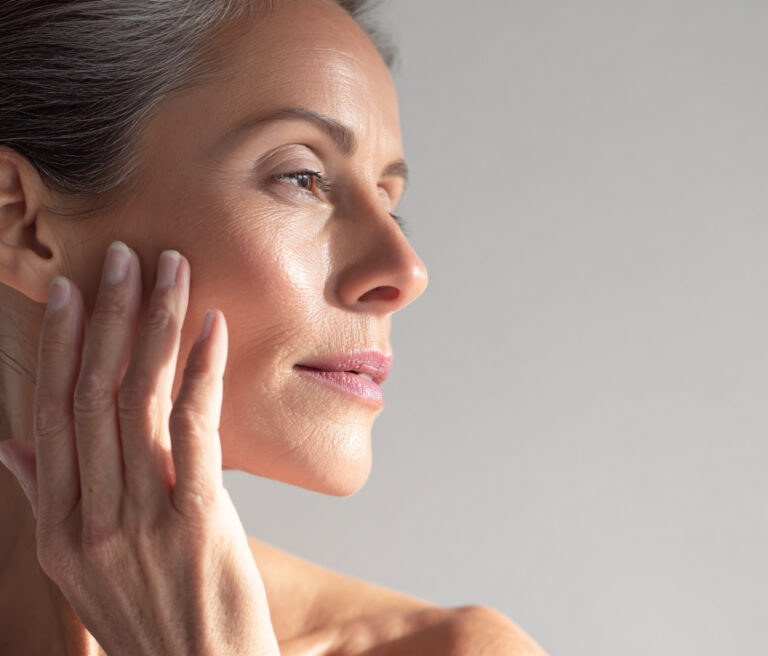
Over time, it is normal for the skin of the face to gradually lose its firmness. This natural process affects both the surface of the skin and its deeper structures: hydration, collagen, elastin, subcutaneous fat, and muscle tone. The good news? Several solutions exist to slow this process and restore a fresher, more toned appearance to the face.
What Causes Loss of Facial Firmness?
1. The Surface Skin (Epidermis)
With age, the skin:
- retains moisture less effectively
- produces fewer ceramides
- renews its cells more slowly
- loses radiance
As a result, the skin appears thinner, duller, and less luminous.
2. The Deeper Dermis
This is where supportive fibers such as collagen and elastin are found.
Over the years:
- their production slows down
- their structure becomes more rigid
- the dermis becomes thinner
The skin gradually loses density and elasticity. The first signs of sagging typically appear in the cheeks, lower face, and eye contour.
3. Decrease in Natural Hyaluronic Acid
Hyaluronic acid, essential for retaining water and maintaining volume, decreases in both quantity and quality.
This can lead to:
- under-eye hollows
- loss of volume in the cheeks
- shadows that create a tired appearance
How Can Facial Firmness Be Improved?
The 3 Key Steps
1. Hydrate and Protect the Skin Daily
This is the absolute foundation. Well-hydrated skin immediately appears plumper and more radiant.
To optimize hydration:
- cleanse the skin with a gentle cleanser
- use a hydrating serum (hyaluronic acid, peptides)
- apply a cream suited to your age and skin type
- protect the skin every morning with an SPF 30+
A simple, consistent, and well-adapted routine already makes a significant difference.
2. Stimulate Collagen and Cell Renewal
To improve firmness, deeper action is required.
Here are the most effective treatments in 2026:
- Microneedling
Intensely stimulates collagen, improves skin texture, and firms the skin. - PRP (Platelet-Rich Plasma)
Ideal for revitalizing tissues and improving elasticity. - Collagen biostimulator
A powerful collagen biostimulator that works gradually to improve firmness, density, and overall skin quality.
These treatments deliver visible results from the first sessions and can be easily adapted to different skin types.
3. Restore Lost Hyaluronic Acid
When the structure of the face changes (tear troughs, hollows, volume loss), restoring support becomes essential.
Dermal fillers help to:
- redefine facial volumes
- improve facial structure
- reduce hollows and shadows
- firm facial contours
These treatments integrate seamlessly into a comprehensive rejuvenation approach, while respecting the face’s natural morphology.
Conclusion: A Global Approach for Visible Results
Loss of firmness is part of the natural aging process, but modern solutions make it possible to regain firmer, more radiant, and better-supported skin.
The ideal approach combines:
- an adapted skincare routine
- collagen-stimulating treatments
- volumizing support when necessary
Every face is unique. A personalized assessment helps determine the treatments best suited to your skin, concerns, and goals.