
Category: Préoccupations

  • Bruxism

    Bruxism

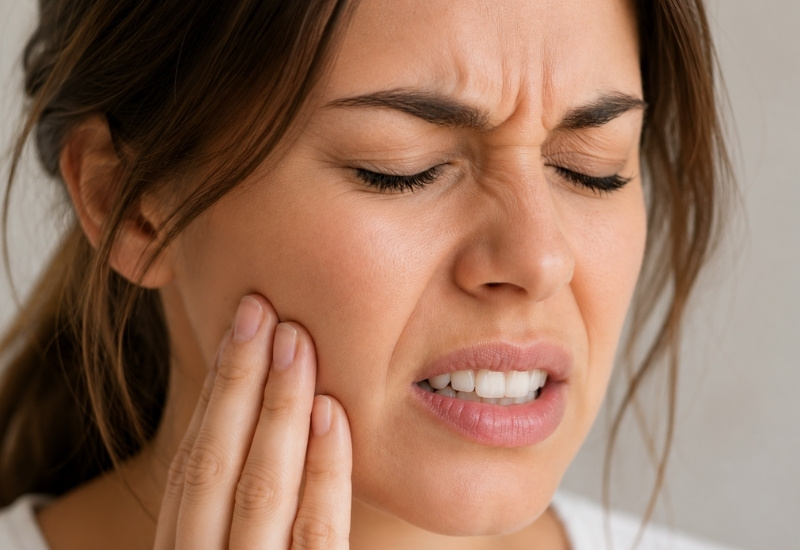
    Bruxism is the involuntary clenching or grinding of the teeth. This repeated grinding and tension in the jaw muscles can occur during sleep or throughout the day and may lead to a variety of symptoms, including jaw pain, facial tension, and tooth sensitivity.
    Skin presenting a small subcutaneous cyst before a medical removal procedure.

    Understanding Bruxism

    What is it?

    Bruxism is associated with excessive contraction of the jaw muscles, often triggered by stress, fatigue, or anxiety. Clenching or grinding the teeth can occur during the day or while sleeping, leading to muscle tension in the face and jaw.

    Types of bruxism

    • Sleep bruxism: Clenching or grinding the teeth during sleep
    • Awake bruxism: Involuntary jaw clenching or tension during the day
    • Muscle hypertonicity: Chronic tension in the chewing (mastication) muscles

    Common symptoms

    • Jaw pain or stiffness
    • Tension in the temples
    • Frequent headaches
    • Neck or shoulder discomfort
    • Sensitive or worn teeth
    • A feeling of jaw muscle fatigue upon waking

    Let Us Guide You

    Do you have questions or are you unsure which treatment is right for you? Our team is here to support you and recommend options tailored to your needs.


      How would you like to be contacted?

      Causes & Contributing Factors

      Bruxism can be influenced by several lifestyle, sleep, and stress-related factors.

      Our Recommended Treatments

      Neuromodulator injections to smooth forehead lines, frown lines and crow’s feet.

      Neuromodulator Injections (Botulinum Toxin)

      Used to reduce excessive jaw muscle activity and help relieve tension caused by teeth clenching. These injections primarily target the masseter muscles responsible for excessive muscle contraction.

      Learn more >

      Reduce Daily Stress

      • Stay physically active
      • Practice relaxing activities 
      • Learn to consciously relax your jaw muscles

      Improve Your Sleep

      • Maintain a consistent sleep routine 
      • Limit stimulants in the evening

      Maintain Healthy Lifestyle Habits

      • Reduce caffeine intake
      • Limit alcohol and tobacco use
      • Avoid unconsciously clenching your jaw

      Frequently Asked Questions (FAQ)

      Yes. Many people grind their teeth while sleeping without realizing it. Morning symptoms such as jaw fatigue or headaches are often the first signs.

      Neuromodulator injections can help relax specific jaw muscles responsible for excessive clenching and reduce the muscle tension associated with bruxism.

      Yes. Fatigue and sleep disturbances may increase episodes of bruxism and jaw muscle tension.

      A consultation is recommended if jaw pain becomes frequent, your teeth show signs of wear, muscle tension affects your daily comfort, or symptoms interfere with your sleep and quality of life.

    • Double Chin

      Double Chin

      A double chin is a common concern that can appear with age, weight fluctuations, or genetics. Discover how targeted medical aesthetic treatments can help reduce excess fat or skin laxity under the chin and improve the definition of your facial profile.

      Profile of a woman with a slight double chin before a treatment to reduce submental fat.

      Understanding a double chin

      What is a double chin?

      A double chin refers to an accumulation of tissue beneath the chin that creates a visible fold or fullness between the chin and the neck. This area can make the profile appear less defined and the facial contour less structured.

      Depending on the individual, it may involve:

      • an accumulation of submental fat
      • loose skin in the neck area
      • a combination of both

      Common signs include:

      • a fold or fullness beneath the chin
      • a less defined jawline
      • a less sculpted facial profile

      Medical aesthetic treatments can help improve the definition of the chin and jawline, creating a more harmonious profile.

      Let Us Guide You

      Do you have questions or are you unsure which treatment is right for you? Our team is here to support you and recommend options tailored to your needs.


        How would you like to be contacted?

        Causes & Triggering Factors

        Several factors can contribute to the development of a double chin, including genetics, skin aging, weight fluctuations, and loss of skin firmness.

        Our Recommended Treatments

        Skinbooster treatment to deeply hydrate the skin and smooth fine lines on the face, neck and décolleté.

        Double Chin Treatment

        An injectable treatment using deoxycholic acid that targets and reduces fat beneath the chin to refine the profile and redefine the facial contour.

        Learn more >

        Maintain Skin Firmness

        • Apply sunscreen on the face and neck. 
        • Regularly moisturize the skin of the neck and chin.

        Adopt Good habits

        • Maintain good posture. 
        • Gently massage the neck and chin area.

        Maintain a Healthy Lifestyle

        • Maintain a stable weight. 
        • Follow a balanced, nutrient-rich diet.
        • Engage in regular physical activity.  

        Frequently Asked Questions (FAQ) 

        Yes. Several medical aesthetic treatments can reduce submental fat or tighten the skin to improve the definition of the facial profile.

        Facial exercises may slightly tone the neck muscles, but they generally do not reduce fat beneath the chin.

        Results can be long-lasting, especially when weight remains stable and a healthy lifestyle is maintained.

      • Skin Moles 

        Skin Moles

        Moles, also called nevi, are small pigmented spots that are generally benign. Present from childhood or appearing with age, they are usually harmless, but regular monitoring is essential to detect any suspicious skin changes.

        Woman examining a mole before a treatment to safely remove the lesion and improve skin appearance.

        Understanding Moles and Their Evolution

        What are moles?

        Moles (nevi) are natural skin features that vary based on genetics, ages and sun exposure.

        They are clusters of melanocyte, the skin’s pigment-producing cells. Moles can be flat or slightly raised, and range in color from beige to brown or black.

        They can appear anywhere on the body and often evolve over time.

        While most moles are harmless, some may change due to sun exposure or hormonal fluctuations. Regular monitoring helps detect any unusual or suspicious changes early.

        Let Us Guide You

        Do you have questions or are you unsure which treatment is right for you? Our team is here to support you and recommend options tailored to your needs.


          How would you like to be contacted?

          Causes & Triggering Factors

          Moles develop due to genetic, hormonal, and environmental factors that influence skin pigmentation.

          Our Recommended Treatments

          Skin tag removal treatment at Epiderma using cauterization for smoother, more even and comfortable skin.

          Mole Removal

          A simple and safe in-clinic procedure to remove moles for aesthetic or preventive reasons, helping improve skin uniformity.

          The service is offered exclusively at the Epiderma clinic in Drummondville.

          Prevention Tips

          Protect Your Skin From the Sun

          • Apply SPF 30+ daily
          • Avoid sun exposure between 11 a.m. and 3 p.m.
          • Wear protective clothing and a hat

          Monitor Your Skin Regularly

          • Examine your moles monthly
          • Consult a professional if any mole changes in appearance
          • Take photos to track their evolution

          Healthy Habits

          • Avoid tanning beds
          • Moisturize with gentle skincare
          • Avoid scratching or irritating moles

          Frequently Asked Questions (FAQ)

          A mole is pigmented and flat or slightly raised, while a skin tag is a small soft skin growth usually found on the neck or underarms.

          Consult if a mole changes color, size, or shape, or if it itches, bleeds, or becomes painful.

          A dermatology consultation is recommended if you have more than 50 moles or if many new ones appear suddenly.

          Yes—if evaluated as benign, it can be safely removed in clinic for aesthetic purposes and to improve skin uniformity.