Tag: fine lines and wrinkles

  • Skin Aging: Understanding and Preventing It 

    Skin Aging: Understanding and Preventing It 

    Skin Aging: Understanding and Preventing It

    Illustration of skin aging and the different layers of the skin

    Over time, skin cells take longer to migrate from the deepest layer to the surface — a process that typically lasts between four to five weeks. This phenomenon is amplified by excessive sun or UV exposure, which causes the stratum corneum (the outermost layer of the epidermis) to thicken as a protective response.

    But what are the specific effects of skin aging on the different layers of the skin?

    The Effects of Aging on the Skin’s Layers

    The Epidermis

    • Dryness and dehydration: Sebum production decreases with age, affecting the skin’s protective barrier. As a result, the skin becomes drier and less capable of retaining moisture.
    • Irregular pigmentation: Pigment-producing cells may become dysfunctional, leading to the appearance of pigmentation spots.
    • Thinning: The skin loses density, making the epidermis thinner while the outer layer thickens. This contributes to uneven texture and a dull complexion.
    • Slower cell renewal: The skin’s regenerative capacity diminishes, delaying healing.

    The Dermo-Epidermal Junction

    • Reduced nutrient exchange: The junction between the dermis and epidermis gradually flattens, decreasing cohesion and limiting nutrient transfer.

    The Dermis

    • Dehydration: Water retention becomes less efficient due to decreased hyaluronic acid synthesis.
    • Deeper wrinkles: Collagen quality and quantity decline, leading to more pronounced wrinkles.
    • Loss of firmness: Collagen fibers stiffen and separate, reducing skin firmness.
    • Reduced elasticity: Elastin fibers diminish, decreasing skin elasticity and tone.
    • Skin paleness: Reduced vascularization may contribute to a paler complexion and altered thermoregulation.

    The Hypodermis

    • Sagging of fat mass:Volume loss in the hypodermis accentuates skin laxity.

    Factors Contributing to Premature Skin Aging

    Premature skin aging is largely influenced by external factors such as sun exposure, cold weather, pollution, smoking, alcohol consumption, stress, and an unbalanced diet. These elements generate free radicals that damage essential skin structures — including collagen, elastin, cellular lipids, and DNA — accelerating visible aging and increasing health risks. Fortunately, antioxidants play a protective role.

    Solutions

    Antioxidants

    The body naturally relies on antioxidants to defend against free radicals. While some are produced internally, others must be obtained through diet or topical application. Vitamins E, C, and A are particularly effective when combined.

    Topical antioxidants can help:

    • Reduce free radical damage
    • Support the skin’s natural defense system
    • Decrease inflammation that degrades collagen
    • Protect against UV-related damage

    Although antioxidants cannot reverse skin aging, they are essential for preventing its visible signs.

    If wrinkles deepen, firmness declines rapidly, or pigmentation spots become more pronounced, a personalized clinical evaluation can help identify the most appropriate treatments based on the affected skin layers.

    Aesthetic Treatments

    Several treatments can help minimize visible signs of aging:

    • Glycolic Peel: Using glycolic acid (AHA), this treatment exfoliates the skin by breaking down the bonds between dead skin cells.
    • Microdermabrasion: This technique removes dead skin cells from the outer layer, leaving the skin smoother and more refined.
    • Photorejuvenation: Stimulates collagen production, improving skin tone and reducing superficial wrinkles.
    • Neuromodulator Injections: Relax facial muscles to soften expression lines, particularly on the forehead and around the eyes.


    Combined with proper sun protection and a tailored skincare routine, these professional treatments help preserve skin health and youthful appearance over time.

    Would you like to better understand your skin’s condition and target the most suitable treatments? Book your personalized skin evaluation with one of our professionals.
    BOOK AN APPOINTMENT

  • Every Concern Has Its Solution

    Every Concern Has Its Solution

    Every Concern Has Its Solution

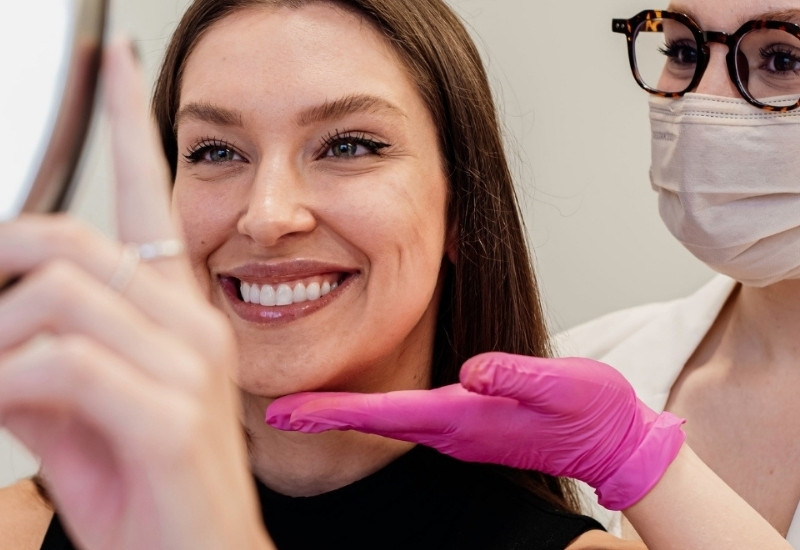
    Young woman undergoing an evaluation to identify treatments suited to her skin concerns.

    Wrinkles, Dark Circles, and Volume Loss

    Wrinkles, dark circles, and volume loss are common signs of skin aging. Several treatments can help address these concerns, including neuromodulator injections, dermal fillers, and PRP or PRF treatments for the under-eye area.

    Neuromodulators target dynamic lines, particularly in the upper face, by relaxing the muscles responsible for their formation. Dermal fillers restore lost volume in areas affected by sagging, providing an immediate rejuvenating effect.

    PRF (Platelet-Rich Fibrin), a 100% natural treatment, uses your body’s own platelets and growth factors to improve the appearance of under-eye discoloration, resulting in a brighter, more refreshed look.

    Dark Spots and Pigmentation Irregularities

    Photorejuvenation, performed under medical supervision, is an effective solution for treating both pigmentary and minor vascular concerns, helping restore a more even, healthy complexion.

    This treatment targets superficial concerns such as hyperpigmentation, freckles, lentigines, telangiectasia, rosacea, and diffuse redness.

    For milder irregularities, a series of peels or microneedling treatments may also provide visible improvements.

    Cellulite and Skin Texture Irregularities

    To address cellulite, we use advanced technology designed to improve skin smoothness and firmness. This approach acts on collagen fibers, fibrous bands, and fat cell structure.

    Unlike older technologies, this method combines infrared energy, radiofrequency, mechanical massage, and suction, allowing for shorter treatments and enhanced results.

    Rosacea and Visible Capillaries

    Rosacea-related redness is often caused by dilated capillaries and altered microcirculation in the facial area.

    At Epiderma, we treat these concerns using sclerotherapy injections, a gentle, minimally invasive approach that requires no downtime.

    Varicose Veins and Heavy Legs

    Varicose veins occur when veins are no longer able to efficiently return blood to the heart, leading to symptoms such as leg heaviness, fatigue, and skin changes.

    Varicose vein treatments at Epiderma are performed using sclerotherapy. This minimally invasive procedure involves injecting a sclerosing agent into the affected vein. Each session lasts approximately 20 minutes and requires no recovery period.

    Acne and Oily Skin

    For acne-prone and oily skin, we offer specialized peels along with Vivier Pharma skincare products.

    The Neutra-Acne Peel provides anti-inflammatory, antibacterial, and exfoliating benefits. It helps rebalance the skin, refine enlarged pores, reduce breakouts, and improve the appearance of mild to moderate acne scarring.

    Unwanted Hair

    If unwanted hair is a concern, laser hair removal may be the ideal solution. Epiderma has specialized in this treatment for over 25 years, using advanced laser technology to deliver effective, long-lasting results.

    A complete treatment plan typically involves 5 to 6 sessions, resulting in approximately 80% hair reduction in the treated area. Sessions are spaced about six weeks apart to respect the natural hair growth cycle.

    If you have questions or uncertainties before beginning your medico-aesthetic journey, we always recommend starting with a complimentary consultation. Our technicians will take the time to listen to your concerns and recommend treatments tailored to your needs.

    Book your in-clinic consultation today.

  • Thread Lift Treatment: The Non-Surgical Alternative for a Lifting Effect

    Thread Lift Treatment: The Non-Surgical Alternative for a Lifting Effect

    Thread Lift Treatment: The Non-Surgical Alternative for a Lifting Effect

    Dr. Mai Ho presents thread lift treatment and her medical approach for a natural lifting effect.

    What Is a Thread Lift Treatment?

    (M.H.) – Thread lifts use absorbable threads equipped with small cones that are inserted beneath the skin to reposition sagging tissues. This technique is primarily used to treat areas of the face such as the cheeks, marionette lines, and jowls.

    The lifting effect is immediate, with continued improvement over the six months following the treatment. According to manufacturers, results may last up to one year, and in some cases, even longer.

    Who Is This Treatment Recommended For?

    (M.H.) – Thread lift treatments are generally recommended for individuals between the ages of 35 and 60 who have skin that is neither too thin nor too thick and who are experiencing mild to moderate skin laxity.

    This treatment is ideal for patients who wish to avoid surgical facelifts but are seeking a more noticeable lifting effect than what dermal fillers alone can provide.

    Dr. Mai Ho also recommends this approach for patients who have previously had filler treatments and would like additional lifting without undergoing surgery. This method can provide approximately up to 1 cm of lift, allowing for visible yet realistic results.

    How Does the Treatment Work?

    (M.H.) – The procedure typically lasts between one and two hours. For a full-face treatment, approximately six to ten threads are inserted (both sides combined).

    The threads are placed beneath the skin using an aseptic technique and local anesthesia to minimize discomfort at the entry and exit points.

    Dr. Mai Ho presenting thread lift treatment and her medical approach for achieving a natural, subtle lift.

    Is the Treatment Painful? Do the Threads Remain Under the Skin?

    (M.H.) – Although the treatment is semi-invasive and slightly more involved than filler injections, it is generally well tolerated.

    Local anesthesia is used, but the procedure may feel more sensitive than traditional injections, making it less suitable for highly anxious individuals.

    Following treatment, patients may experience mild swelling, tenderness, or bruising, which typically resolves within a few days. The threads remain beneath the skin and are gradually absorbed over approximately six months.

    Why Did You Choose to Offer This Treatment?

    (M.H.) – Thread lifts have been used for over 20 years, with varying levels of popularity. In the past decade, however, the technique has experienced significant renewed interest, particularly in Europe and Asia.

    Dr. Mai Ho considers thread lifts a valuable therapeutic option for patients seeking a lifting effect without surgery.

    Contraindications

    As with any medical procedure, thread lift treatments have certain contraindications, including:

    • Severe systemic diseases
    • Autoimmune conditions
    • Local or systemic infections
    • Use of anticoagulant medications
    • Pregnancy and breastfeeding
    • Predisposition to keloids or hypertrophic scars
    • Previous permanent fillers
    • Facial or scalp eczema or psoriasis
    • Allergy to lidocaine, epinephrine, or thread components

    Thread lift treatments represent an excellent non-surgical solution for individuals seeking a natural-looking lift and immediate results without surgery. Thanks to Dr. Mai Ho’s expertise, this treatment is now available at Epiderma Saint-Hyacinthe, offering patients an additional option to restore firmness and facial definition.

    MAKE AN APPOINTMENT

  • Dr. Catherine Nappert: Where Science Meets Sensitivity — A Human-Centered Vision of Aesthetic Medicine

    Dr. Catherine Nappert: Where Science Meets Sensitivity — A Human-Centered Vision of Aesthetic Medicine

    Dr. Catherine Nappert: Where Science Meets Sensitivity — A Human-Centered Vision of Aesthetic Medicine

    Dr. Catherine Nappert, physician specializing in aesthetic medicine at the Epiderma Drummondville clinic.

    Passionate about aesthetics in all its forms and guided by a deeply human approach, she shares her vision of a respectful aesthetic medicine where art, science, and attentive listening come together to reveal each patient’s authentic beauty.

    Can You Tell Us About Your Medical Background and What Led You to Aesthetic Medicine? 

    Practices aimed at enhancing or modifying the face date back to ancient times. Regardless of differing opinions, aesthetics remain an undeniable part of our modern societies.

    Personally, I have always been fascinated by aesthetics in all its forms, as it expresses both creativity and individuality.

    During my medical training at the Université de Montréal, I found myself torn between plastic surgery and ENT. I ultimately chose ENT for its strong focus on facial and neck anatomy, the compelling balance between medical and surgical practice, the diversity of patients, and the wide technical scope of endoscopic and microscopic procedures.

    After 27 years of hospital-based ENT practice and 15 years in aesthetic medicine, I reached a professional turning point that motivated me to join the Epiderma/Medicart network and devote myself exclusively to aesthetic medicine in Drummondville.

    Aesthetic medicine beautifully combines art and science to help patients feel more confident. And confidence enhances beauty.

    What Is Your Vision of Beauty and Well-Being in Aesthetic Medicine? 

    Beauty is plural and deeply subjective. My goal is to enhance each patient’s facial harmony so that their outer appearance faithfully reflects their inner beauty — the best version of themselves.

    Restoring a radiant complexion or balancing facial proportions may seem subtle, yet for many individuals, these changes foster greater self-confidence and a renewed sense of harmony with their reflection.

    How Do You Guide Patients Through Their Aesthetic Journey? 

    A successful aesthetic treatment begins with trust. Providing attentive, judgment-free listening is essential.

    I help patients articulate realistic expectations by clearly explaining what can and cannot be achieved. Understanding their deeper motivations allows me to assess whether their request is coherent and appropriate.

    For example, I may recommend addressing overall facial balance through a soft global lift using injectables before targeting finer lines around the mouth. This reflects my philosophy of step-by-step facial rejuvenation — always tailored to the patient’s desired level of investment.

    I may also suggest lesser-known yet highly effective techniques, such as the lifting effect of temporal volume restoration or chin refinement to complement marionette line treatment.

    The objective is never transformation, but harmonization — enhancing what already exists while preserving each patient’s individuality.

    My role extends beyond the technical procedure. Evaluating satisfaction and, at times, providing emotional support are integral parts of quality patient care.

    In Your Opinion, What Defines a Successful Aesthetic Treatment? 

    Every face, every skin type, every expression is unique. 

    A successful treatment relies on precise, safe, and personalized techniques, combined with accurate dosing to achieve natural, harmonious results. 

    Each technology has its strengths and limitations. Often, it is a series of subtle refinements that produces the most gratifying outcomes. 

    Personally, I appreciate when patients return saying they were told they look “well-rested” rather than that their “face looks different.” 

    A well-executed treatment should not be obvious — it should simply create a refreshed, balanced appearance aligned with the patient’s natural features. 

    What Advice Would You Give Someone Considering Their First Aesthetic Treatment? 

    Artificial intelligence increasingly fuels unrealistic standards of perfection, making it easy to feel overwhelmed by aesthetic marketing claims.

    The decision to pursue treatment should always be made for oneself — not to seek external validation.

    For first-time patients, choosing a medico-aesthetic clinic with genuine medical oversight is crucial. A physician evaluates skin quality, facial structure, medical history, and underlying expectations to determine the most appropriate approach.

    This medical perspective ensures safety, prevents excess, and guarantees a rigorous understanding of anatomy, as well as the expertise to manage potential complications.

    Selecting a qualified practitioner committed to both evaluation and follow-up is ultimately a choice for professionalism, transparency, and self-respect.

    Dr. Catherine Nappert’s approach, grounded in harmony, trust, and respect for individuality, fully reflects the values of the Epiderma network. Whether you are considering your first treatment or refining your skincare journey, meet Dr. Nappert at Epiderma Drummondville for personalized, safe, and compassionate care.

    Book an appointment with Dr. Catherine Nappert