Category: Concerns

  • Which treatment should you choose: neuromodulators, dermal fillers, skinboosters or biostimulators?

    Which treatment should you choose: neuromodulators, dermal fillers, skinboosters or biostimulators?

    Which treatment should you choose: neuromodulators, dermal fillers, skinboosters or biostimulators?

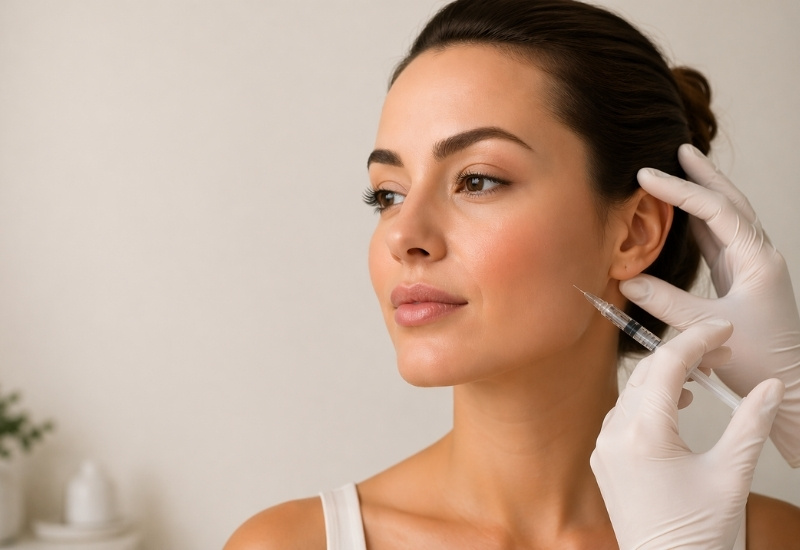
    Facial aesthetic treatment with injections to improve wrinkles, volume and overall skin quality

    At Epiderma, these treatments are personalized according to your needs to achieve natural and harmonious results.

    Each treatment works differently and addresses specific concerns. They are often complementary and allow us to target different levels of skin aging.

    Here’s how to choose the right option based on your goals.

    1. Neuromodulators (botulinum toxin): smoothing expression lines

    Ideal for:

    How it works:
    Neuromodulators relax the muscles responsible for expression lines.

    Benefits:

    • Fast results (within a few days)
    • Preventative effect
    • Natural look when properly administered

    Duration: 3 to 4 months

    Best for: wrinkles that appear when you move your face

    2. Dermal fillers (hyaluronic acid injections): restoring volume

    Ideal for:

    How it works:
    Dermal fillers add volume, redefine facial contours, and help hydrate the treated area. They can also reduce the appearance of fine lines and correct asymmetries.

    Benefits:

    • Immediate results with medium-term effects
    • Structuring effect
    • Visible rejuvenation

    Duration: 9 to 18 months

    Best for: a face that looks “sunken” or tired

    3. Skinboosters: improving skin quality

    Ideal for:

    How it works:
    Micro-injections of fluid hyaluronic acid deeply hydrate the skin.

    Benefits:

    • Natural glow effect
    • Improves texture and elasticity
    • Does not add volume

    Duration: maintenance recommended every 6 to 9 months

    Best for: enhancing radiance without changing facial features

    4. Collagen biostimulators: deep rejuvenation

    Ideal for:

    How it works:
    Stimulates the natural production of collagen. Can also help restructure the face when volume is needed.

    Benefits:

    • Gradual, natural-looking results
    • Long-lasting effect
    • Overall improvement in skin quality

    Duration: approximately 2 years

    Best for: subtle and long-lasting rejuvenation

    Which treatment should you choose based on your concern?

    Each treatment works differently and addresses specific needs. The right choice depends on your main concern and desired outcome.

    • Expression lines → Neuromodulators (relax muscles and smooth wrinkles)
    • Volume loss → Dermal fillers (restore volume and redefine contours)
    • Dull or dehydrated skin → Skinboosters (deep hydration and improved radiance)
    • Skin laxity or overall aging → Biostimulators (stimulate collagen and firm the skin)

    In many cases, the best approach is to combine treatments to achieve natural and harmonious results.

    Frequently asked questions about injectables

    1. Can these treatments be combined?
    Yes, and it is often the best approach to target different aspects of aging and achieve optimal results.

    2. How do I know which treatment is right for me?
    The choice depends on your main concern (wrinkles, volume, skin quality, or laxity). A consultation with a physician or nurse will help determine the most effective plan.

    3. Are the results natural?
    Yes, when performed by experienced professionals, results are gradual and respect your natural features.

    4. Are injections painful?
    Discomfort is generally minimal. Techniques and products are used to ensure your comfort.

    Conclusion

    Each treatment has a specific role. The choice depends on your goals, your age, and the condition of your skin.

    A personalized evaluation allows us to create a customized plan for natural and harmonious results.

    Book a consultation to discover the treatment plan best suited to your skin.

  • Top 5 SkinCeuticals Products to Transform Your Skin

    Top 5 SkinCeuticals Products to Transform Your Skin

    Top 5 SkinCeuticals Products to Transform Your Skin

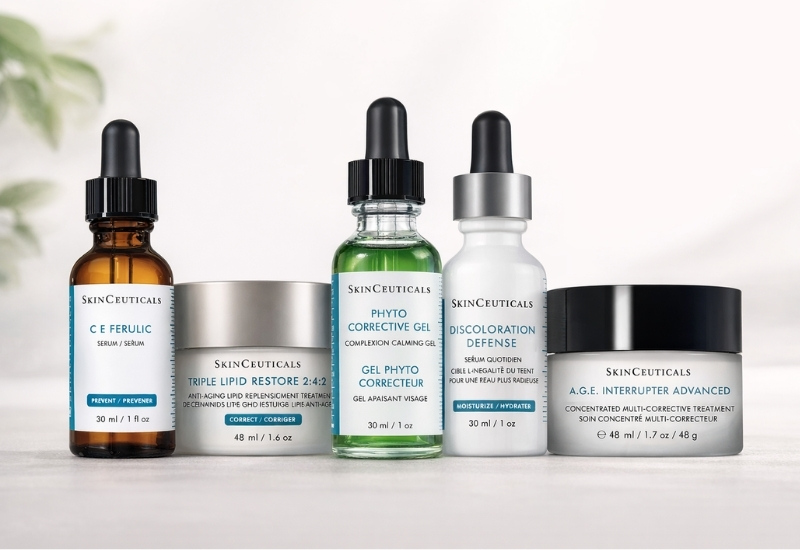
    SkinCeuticals products including CE Ferulic, Triple Lipid Restore, Phyto Corrective Gel, Discoloration Defense and AGE Interrupter for radiant skin

    Here are 5 products recommended to address the most common aesthetic skin concerns.

    1. C E Ferulic

    Radiance and anti-aging prevention

    Concerns addressed:

    When to use:

    • Morning only

    Best combined treatments:

    Result:
    A brighter complexion and skin protected against environmental damage.

    2. Triple Lipid Restore 2:4:2

    Skin nourishment and repair

    Concerns addressed:

    • Dry skin
    • Loss of elasticity
    • Uneven texture

    When to use:

    • Morning and evening

    Best combined treatments:

    Result:
    Skin that is more nourished, strengthened, and visibly firmer.

    3. Phyto Corrective Gel

    Soothing redness and sensitivity

    Concerns addressed:

    When to use:

    • Morning and evening (as needed)

    Best combined treatments:

    Result:
    Calmer skin and a more even complexion.

    4. A.G.E. Interrupter Advanced

    Firmness and advanced anti-aging correction

    Concerns addressed:

    When to use:

    • Evening (or morning and evening for dry skin)

    Best combined treatments:

    Result:
    Denser, firmer, and visibly rejuvenated skin.

    5. Discoloration Defense

    Dark spots and uneven skin tone

    Concerns addressed:

    When to use:

    • Morning and evening

    Best combined treatments:

    Result:
    A more even complexion, visibly reduced dark spots, and improved overall skin quality.

    Key takeaway

    A well-structured routine used consistently (morning and evening) helps:

    • optimize treatment results
    • prolong their effects
    • visibly improve skin quality

    The ideal combination: in-clinic treatments + at-home skincare

    Take care of your skin with a personalized approach

    Every skin is unique. A personalized consultation helps identify the best combination of treatments and products based on your goals.

    Book your free consultation today.

  • Discover the 4 Essential Treatments for Radiant Skin

    Discover the 4 Essential Treatments for Radiant Skin

    Discover the 4 Essential Treatments for Radiant Skin

    Epiderma’s four essential treatments to reduce spots, redness, acne, and enhance skin radiance.

    At Epiderma, we offer a selection of targeted treatments designed to exfoliate, hydrate, smooth, and illuminate your complexion.

    Discover our four must-have treatments for glowing skin this spring.

    1. Peel Treatments: Reveal fresh, radiant skin 

    With the change of season, it’s essential to eliminate the dead skin cells accumulated during winter. Peeling treatments help renew the skin deeply, revealing a more even and luminous complexion.

    Epiderma peels target multiple concerns: dull skin, enlarged pores, imperfections, pigmentation spots, and signs of aging.

    • Revitalizing Micro-Peel: perfect for restoring glow and evening out skin tone
    • Allure Peel: helps reduce pigmentation spots and smooth fine lines
    • Neutra-Acne Peel: ideal for purifying the skin, reducing imperfections, and tightening pores

    2. Microdermabrasion: An instant glow boost

    Microdermabrasion is a must-have spring treatment to gently exfoliate the skin and instantly revive its radiance.

    From the very first session, skin appears smoother, brighter, and more even. This treatment also helps reduce the appearance of pigmentation spots, fine lines, and acne scars, while improving the absorption of skincare products.

    For visible and long-lasting results, a series of 4 to 6 sessions is recommended.

    3. Microneedling: Improve skin texture by stimulating collagen

    Microneedling, also known as collagen induction therapy, involves the use of fine needles to create controlled microchannels in the skin. These microstimulations trigger the natural production of collagen and elastin, encouraging skin regeneration.

    Microneedling is particularly effective for reducing the appearance of enlarged pores, fine lines, and acne scars, while improving skin texture, tone, and overall radiance.

    This medico-aesthetic treatment also enhances the penetration of gels, creams, and serums, maximizing their effectiveness within the deeper layers of the skin.

    4. Photorejuvenation at Epiderma: Light-powered skin renewal

    Photorejuvenation is ideal in the spring to correct pigmentation spots and visible redness after winter, while restoring the skin’s natural glow.

    This treatment effectively targets minor pigmentation and vascular concerns such as hyperpigmentation, freckles, lentigines, telangiectasia, couperose, rosacea, and erythema.

    Using advanced Elos Plus (SRA) technology, which combines intense pulsed light (IPL) and bipolar radiofrequency, photorejuvenation delivers precise, visible, and long-lasting results: reduced spots and redness, improved skin texture, and a more even, radiant complexion.

    In Conclusion

    This spring, give your skin the renewal it deserves. Epiderma treatments are designed to reveal your natural glow and prepare your skin for summer.

    Book a complimentary consultation today.

  • Men’s Skincare Routine 

    Men’s Skincare Routine 

    Men’s Skincare Routine

    More and more men are adopting a proper skincare routine rather than maintaining a minimal or nonexistent one. A solid grooming routine is a cornerstone of good hygiene and should be considered just as important as maintaining physical and mental well-being. Well-cared-for skin means fewer breakouts, less irritation and redness, and a delay in visible signs of aging. You’ll thank us in 10 years. Gentlemen, here is your new daily ritual. 

    Men’s skincare routine — essential steps to cleanse, exfoliate, hydrate, and protect men’s skin.

    Gentlemen, here is your new daily routine by following the steps outlined below.

    STEP 1 

    CLEANSE 

    Cleansing your skin is essential, both morning and evening. This step removes impurities, excess oils naturally produced by your body, environmental pollutants, sunscreen, and any products applied throughout the day. Daily cleansing helps maintain a balanced skin pH. 

    Note: Washing your face more than twice per day is not recommended, as it may stimulate increased oil production. 

    Suggestion: 

    – Purifying Cleansing Milk | Medicart 

    STEP 2 

    EXFOLIATE 

    Using an exfoliant helps unclog pores, remove dead skin cells, and eliminate debris that can dull the complexion. It can also help prevent ingrown hairs caused by shaving. 

    However, exfoliation should not be performed daily. Once or twice per week is sufficient. 

    Suggestion: 

    – Triple-Action Gentle Exfoliant | Medicart 

    STEP 3 

    HYDRATE & TREAT 

    The final — and certainly not least important — step is hydration. Many factors contribute to skin dryness and irritation, including shaving. 

    To combat dehydration, imperfections, and visible signs of aging, selecting the right treatment product is crucial. This step should be performed morning and evening. 

    Suggestions: 

    – LEXXEL Moisturizing Cream | Vivier Pharma 

    – HA5 Rejuvenating Hydrator | SkinMedica 

    IMPORTANT REMINDER 

    While sunny days are always enjoyable, protecting your skin year-round is essential. Health Canada recommends using a broad-spectrum sunscreen with an SPF of 30 or higher. 

    Daily sun protection helps preventlong-term damage such as premature skin aging. 

    Suggestions: 

    – Total Defense + Repair SPF 34 | SkinMedica 

    – Sheer Broad Spectrum SPF 45 | Vivier Pharma 

    BONUS STEP 

    The skin under the eyes is the thinnest area of the face (aside from the lips) and requires special care. Using a targeted eye treatment can help visibly refresh and brighten the appearance of the eyes. 

    Suggestions: 

    – Sublime Eye Radiance | Medicart 

    – GrenzCine Eye | Vivier Pharma 

    This article originally appeared in Medicart’s complimentary web magazine. 

  • Why Choose Sclerotherapy for Varicose Vein Treatment

    Why Choose Sclerotherapy for Varicose Vein Treatment

    Why Choose Sclerotherapy for Varicose Vein Treatment

    Sclerotherapy for varicose vein treatment: a precise, non-invasive injection to eliminate varicose veins and improve circulation.

    What Exactly Is Sclerotherapy? 

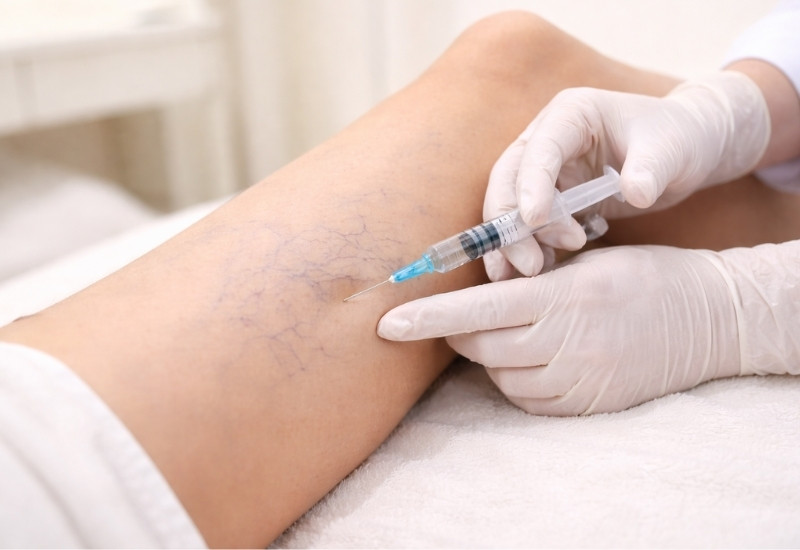
    Sclerotherapy involves injecting a sclerosing solution into the affected vein. The solution irritates the vein walls, causing them to collapse and seal shut. Over time, the treated vein is permanently reabsorbed, significantly reducing the risk of recurrence.

    Sclerotherapy effectively treats visible, insufficient, and/or painful varicose veins. The process begins immediately after the injection and may continue for several days to a few weeks, depending on the size of the treated vein.

    In some cases, injections may be performed under ultrasound guidance for greater precision and visibility. This technique, known as ultrasound-guided sclerotherapy, is typically used for deeper or more severe varicose veins. The injected solution is often more potent than that used in conventional sclerotherapy.

    Benefits of Sclerotherapy 

    Sclerotherapy is highly precise and delivers rapid results. One of its greatest advantages is that no recovery period is required — you can resume normal activities immediately after treatment.

    For patients concerned about discomfort, this technique is generally well tolerated. You may experience mild tingling during the injection. Soon after, symptoms such as heavy or aching legs can improve significantly.

    Post-Treatment Recommendations 

    Although results are often visible quickly, adopting the following habits can help maximize effectiveness and minimize side effects:

    • Choose lukewarm baths or showers and apply cool water to the legs
    • Wear compression stockings
    • Apply an appropriate moisturizer to maintain skin health
    • Engage in light physical activity such as walking or stretching
    • Use the stairs and activate your feet regularly
    • Stimulate calf circulation by walking on your toes
    • Avoid remaining in the same position for extended periods, as this may negatively impact vein health.

    Sclerotherapy is generally associated with minimal discomfort, but following post-treatment guidelines is essential for optimal comfort and results.

    Results 

    Once treated with sclerotherapy, the affected vein is eliminated, thereby reducing the risk of complications. 

    Because varicose veins are a chronic and progressive condition, new veins may develop over time. However, sclerotherapy remains an effective solution for managing them. 

    Preventive care is equally important. Maintaining a healthy lifestyle — including balanced nutrition, regular movement, limiting excessive heat exposure, and avoiding tobacco — can help slow progression. 

    Schedule your consultation today to determine whether sclerotherapy is right for you

  • Let’s Talk Peels: The “New Skin” Effect 

    Let’s Talk Peels: The “New Skin” Effect 

    Let’s Talk Peels: The “New Skin” Effect

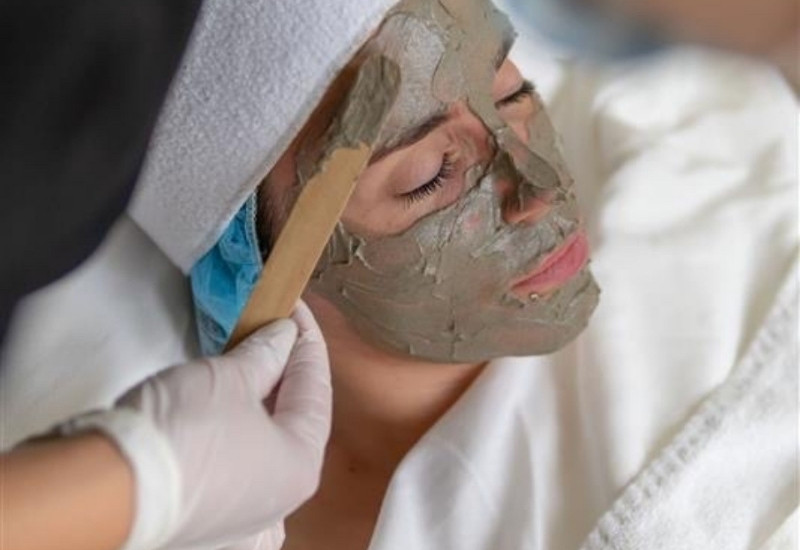
    Application d’un peeling professionnel Vivier sur le visage d'une femme.

    A Bit of History 

    Since ancient times, women have used natural acids to exfoliate and brighten their skin: 

    • Tartaric acid derived from wine sediment in Egypt 
    • Citric acid from lemons during the Renaissance 
    • Glycolic acid extracted from sugar cane, still widely used today 

    Modern science has refined these methods to deliver treatments that are safer, more precise, and significantly more effective. 

    What Exactly Is a Peel? 

    A peel is a professional exfoliatingtreatment that stimulates skin renewal by removing dead skin cells. 

    It helps to: 

    • Refine skin texture 
    • Even out the complexion 
    • Reduce the appearance of pigmentation spots 
    • Minimize imperfections 
    • Enhance radiance 
    • Smooth fine lines 

    The treatment involves applying an exfoliating solution with a brush or a soft compress. The solution remains on the skin for a few minutes before being gently neutralized. 

    A peel does not damage the skin — it regenerates it. 

    Types of Peels and Their Active Ingredients 

    1 — Glycolic Acid Peel (AHA) 

    Derived from sugar cane, glycolic acid is one of the most widely used exfoliating agents due to its small molecular size, which allows it to penetrate the skin easily. It provides a fine yet deep exfoliation, improves radiance, softens dark spots, and leaves the skin smoother and more even.

    This peel comes in two forms. 

    • The aesthetic version, which is gentler, contains a lower concentration of AHAs. It requires multiple sessions and delivers gradual, subtle results.
    • The medico-aesthetic version is more concentrated and works deeper within the skin. It is particularly effective for reducing the appearance of enlarged pores, smoothing uneven texture, reviving dull complexions, and improving residual acne marks as well as early signs of aging.

    2 — Salicylic Acid Peel (BHA) 

    Derived from willow bark, salicylic acid is a key ingredient for oily, acne-prone, or congested skin. Unlike AHAs, it is oil-soluble, allowing it to penetrate inside the pores.

    This type of peel helps dissolve comedones, reduce breakouts, calm inflammation, and lower the risk of acne-related scarring. It is ideal for skin affected by excess shine, blackheads, or recurring imperfections.

    3 — Combination Peel (AHA + BHA) 

    Combination peels leverage the benefits of both acid families — glycolic (AHA) and salicylic (BHA). This formula is ideal for acne-prone, uneven, or hyperpigmented skin.

    In a single treatment, the skin benefits from both surface and deeper exfoliation, helping to smooth texture, even out tone, and improve the appearance of imperfections.

    What Happens During a Professional Peel? 

    A typical treatment includes: 

    • A consultation to assess the skin 
    • Application of the exfoliating solution 
    • A 3 to 5-minute exposure time 
    • Gentle neutralization 
    • Post-treatment skincare recommendations 

    It is normal to experience: 

    • Mild tingling 
    • Slight redness 
    • Light peeling in the following days 

    Results appear quickly: a brighter complexion, smoother skin, and less visible pores. 

    Contraindications 

    A peel is not recommended in cases of: 

    • Pregnancy or breastfeeding 
    • Active dermatitis or inflammatory flare-ups 
    • Unstable chronic skin conditions 
    • Allergy to any active ingredient 
    • Recent sun exposure 

    A proper evaluation is essential to ensure a safe treatment. 

    Conclusion: New Skin Within Reach 

    Modern peels are far gentler, better controlled, and more effective than ever before. They provide a true radiance boost for dull, uneven, or imperfect skin. 

    If you’d like to refresh your complexion, smooth your skin, or improve certain irregularities: 

    Book a complimentary consultation with a medico-aesthetic technician. 

  • Permanent Hair Removal: Laser vs Intense Pulsed Light (IPL) 

    Permanent Hair Removal: Laser vs Intense Pulsed Light (IPL) 

    Permanent Hair Removal: Laser vs Intense Pulsed Light (IPL)

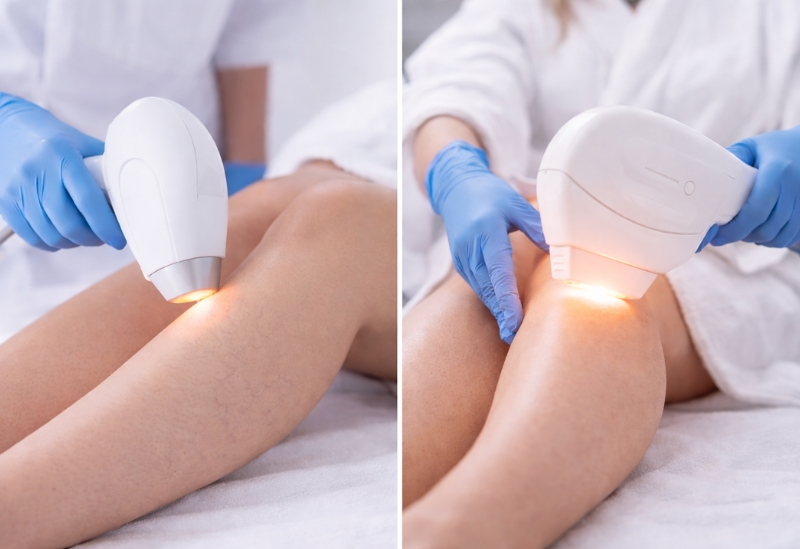
    Medical aesthetic technician performing a laser hair removal treatment on a client at an Epiderma clinic.

    Here is a clear and updated guide comparing laser hair removal — the technology used in all our clinics — and Intense Pulsed Light (IPL), which is more limited and variable.

    How Does Permanent Hair Removal Work?

    Both laser and IPL are based on the same principle:

    Light is absorbed by the melanin in the hair, then converted into heat to destroy the follicle responsible for regrowth.

    Effectiveness, however, depends on the precision, selectivity, and power of the technology used — and this is where laser stands out.

    1 — Laser Hair Removal: The Gold Standard

    For over 25 years, laser technology has been recognized as the most effective, precise, and reliable solution for hair reduction.

    More Targeted Technology

    • Monochromatic, highly selective light
    • Coherent beam that precisely targets the hair from the bulge to the bulb
    • High precision, even in delicate areas

    Enhanced Safety

    Modern lasers feature integrated cooling systems that reduce discomfort and help prevent overheating.

    Suitable for More Skin Types

    Unlike IPL, laser treatments can be safely adapted for:

    • Fair skin
    • Medium skin
    • Darker skin

    → Making it a more inclusive and safer option.

    Fast and Long-Lasting Results

    On average:

    • 5 to 6 sessions
    • Approximately 80% hair reduction (depending on area and skin type)

    Laser hair removal remains the preferred choice for consistent, long-term results.

    2 — Intense Pulsed Light (IPL): Less Precision

    IPL uses a flash lamp that emits a broad spectrum of light, making it less targeted than laser technology.

    Main Limitations

    • Polychromatic, less selective light
    • More variable results
    • Larger treatment head, reducing precision
    • Less effective on deeply rooted or very dark hair

    Compatible Skin Types

    IPL is suitable only for:

    • Very fair skin
    • Dark hair

    It is contraindicated for medium, darker, tanned, or recently sun-exposed skin.

    Results

    Typically requires more sessions, with less consistent and less durable outcomes.

    Use Cases

    IPL may help:

    • Miniaturize certain hairs
    • Lighten finer hair

    However, it does not match the effectiveness of laser for permanent hair reduction.

    3 — Important Contraindications

    Both technologies should be avoided in the following cases:

    • White, light red, or very blonde hair
    • Use of photosensitizing medications
    • Photodermatoses
    • Pregnancy
    • Tattooed areas
    • Recent sun exposure (especially for IPL)

    A personalized assessment is essential to ensure safe treatment.

    Why Choose Laser Hair Removal at Epiderma?

    In all our clinics, we exclusively offer laser hair removal because it provides:

    Superior Long-Term Results

    • Durable reduction
    • Finer hair
    • Slower regrowth

    Maximum Safety

    • Health Canada–approved technologies
    • Precise calibration
    • Integrated cooling systems

    Comprehensive Professional Care

    Treatments performed by medico-aesthetic technicians under medical supervision.

    Personalized Approach

    Each assessment determines:

    • Laser compatibility
    • Required precautions
    • Optimal treatment plan based on skin and goals

    Our commitment: effective, safe, and personalized treatments.

    Conclusion

    Laser hair removal remains the most effective, precise, and safest solution for long-term hair reduction. In comparison, IPL presents more limitations, less precision, and is not suitable for all skin phototypes.

    To determine whether laser treatment is right for you, a personalized evaluation is the essential first step.

    Book your free laser hair removal consultation

  • 5 Effective Massages to Reduce the Appearance of Cellulite 

    5 Effective Massages to Reduce the Appearance of Cellulite 

    5 Effective Massages to Reduce the Appearance of Cellulite 

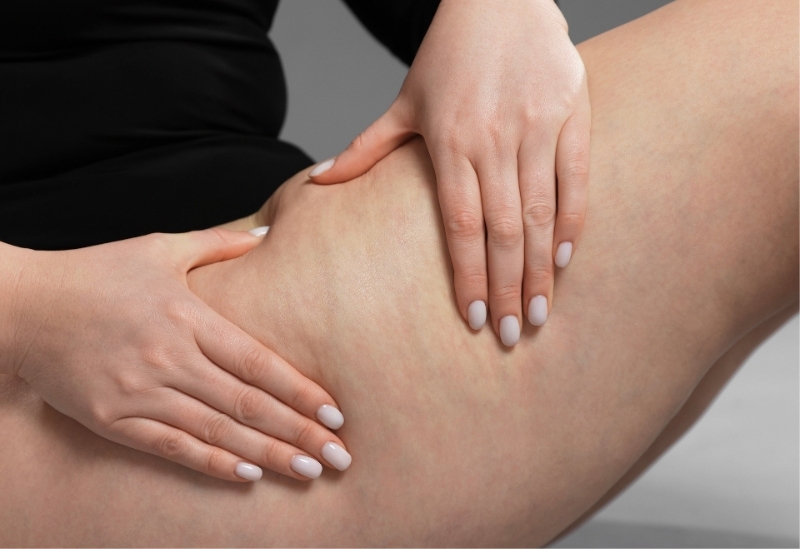
    Techniques de massage anticellulite pour lisser la peau et améliorer la circulation

    Here are five simple and effective massage techniques to incorporate into your beauty routine, along with tips to optimize your results. 

    For best results, we recommend using the Renaissance Glove and Medicart Sculpting Cream, available in the Epiderma online store

    1. Effleurage: Preparing the Skin 

    Effleurage gently warms the tissues and prepares the skin for more intensive techniques. 

    Steps to follow: 

    • Glide your fingertips over the skin 
    • Always work in upward motions 
    • Use soft circular movements 
    • Repeat using flat hands, lightly brushing the surface 

    This massage gently activates circulation and increases tissue responsiveness. 

    2. Palpate-and-Roll: The Classic Technique 

    A must-have technique, palpate-and-roll stimulates exchanges within the skin layers and helps reduce the appearance of dimpling. 

    Steps to follow: 

    • Pinch a fold of skin between your thumb and fingers 
    • Roll the skin while moving forward gradually 
    • Work one area at a time 

    This technique requires some practice but delivers highly visible results. 

    Techniques de massage anticellulite pour lisser la peau et améliorer la circulation

    3. Circular Pressure: Boosting Microcirculation 

    Pressure movements stimulate blood and lymphatic circulation, supporting toxin elimination and tissue oxygenation. 

    Steps to follow: 

    • Enclose the targeted area with one hand 
    • Apply consistent pressure with your fingers 
    • Perform circular motions clockwise 
    • Massage perpendicular to the muscles 

    Ideal before applying a firming or toning cream. 

    4. Percussion Movements: Awakening the Tissues 

    Percussions help tone the skin and stimulate circulation. 

    Steps to follow: 

    • Keep fists lightly closed with relaxed wrists 

    • Tap the skin gently and rhythmically 

    • Avoid the inner thighs 

    This energizing technique works particularly well at the end of your routine. 

    5. Kneading 

    Kneading relaxes muscles, softens tissues, and improves skin texture. 

    Steps to follow: 

    • Place hands flat with thumbs apart 
    • Gently grasp the tissue between both hands 
    • Perform a soft twisting motion 
    • Focus on thighs, buttocks, and hips 

    This massage perfectly complements an anti-cellulite routine. 

    Combining Massage with the Right Products 

    To maximize results: 

    • Perform massages daily or several times per week 
    • Massage each area for 5 to 10 minutes 
    • Use appropriate tools or products (Renaissance Glove, Medicart Sculpting Cream) 
    • Always work upward, following venous circulation 

    Massages help improve skin appearance but do not replace professional treatments such as body contouring or specialized cellulite therapies offered in clinic. 

    Conclusion 

    Incorporating these five massage techniques into your routine helps firm the skin, stimulate microcirculation, and improve the appearance of cellulite. 

    When combined with quality products and professional treatments, results can become even more visible and long-lasting. 

    Source: Le Journal des Femmes 

  • How to Prevent the Appearance of Spider Veins on the Legs

    How to Prevent the Appearance of Spider Veins on the Legs

    How to Prevent the Appearance of Spider Veins on the Legs

    Prevention of spider veins on the legs: tips and advice to keep your legs light and healthy.

    What Is a Spider Vein?

    Like a varicose vein, a spider vein is a vein that no longer efficiently returns blood to the heart. The difference lies mainly in size: varicose veins are larger, deeper, and located in the subcutaneous tissue, while spider veins are smaller, more superficial vessels located within the skin.

    Spider veins may be influenced by several factors:

    • Heredity
    • Vein dilation: when valves function less effectively, blood circulation becomes impaired
    • Reflux from the deep venous system to the superficial venous system
    • The presence of multiple small visible capillaries may indicate a predisposition
    • Local trauma or near a scar

    Other signs to watch for include:

    • Heaviness and fatigue in the legs
    • Irregular skin pigmentation
    • Itching
    • Swelling (edema)
    • Venous ulcers

    What Factors Contribute to Spider Veins?

    Certain everyday factors may promote their development. Understanding them helps reduce risk:

    • Prolonged exposure to heat (sun, hot water, heated floors, hot wax hair removal, etc.)
    • Prolonged standing or sitting
    • Crossing the legs
    • Excess weight
    • Tight clothing (belts, shapewear, restrictive garments)
    • Overly warm boots or socks
    • High-impact sports (tennis, squash, volleyball)
    • Pregnancy
    • Aging
    • Use of hormonal contraceptives

    How Can You Help Prevent Spider Veins?

    Adopting simple daily habits can support venous health and comfort:

    • Choose lukewarm baths and rinse legs with cool water, directing the stream upward
    • Elevate your legs for 30 minutes after prolonged standing or sitting
    • Massage legs from bottom to top using appropriate moisturizing products
    • Elevate your legs while resting or sleeping
    • Stay active: walking, stretching, moving your feet, and engaging the calf muscles are highly beneficial
    • Maintain skin health by applying a body cream regularly
    • Wear compression stockings to support circulation
    • Manage varicose veins and spider veins through sclerotherapy when appropriate

    With consistent, easy-to-follow habits, you can better protect your legs and maintain optimal comfort.

    Book a consultation with a phlebologist to receive a personalized evaluation and discover the treatments best suited to your needs.

  • Varicose Vein Treatment: Understand, Prevent, and Take Action

    Varicose Vein Treatment: Understand, Prevent, and Take Action

    Varicose Vein Treatment: Understand, Prevent, and Take Action

    promotions Epiderma sur les soins médicoesthétiques et l’épilation au laser.

    Here’s what you need to know to better understand their causes, symptoms, and the available treatment options.

    What is a varicose vein?

    A varicose vein is an abnormal dilation of a vein, typically caused by a loss of vein wall tone or impaired blood flow (venous reflux).

    When blood does not circulate properly back to the heart, it can pool in the vein, causing it to become enlarged and visible beneath the skin.

    Varicose veins can appear:

    • at any age
    • on different parts of the body
    • but are especially common on the legs

    Some milder conditions, such as couperose (which affects the cheeks, nose, and chin), are also related to the dilation of small capillary blood vessels.

    Why do varicose veins develop?

    Many factors influence their appearance.

    The primary cause Genetics.

    • 20% risk if neither parent is affected
    • 44% if one parent is affected
    • more than 70% if both parents are affected

    Other contributing factors include:

    • ethnic background
    • age (prevalence increases over time)
    • sex (women are twice as likely to be affected)
    • prolonged standing or sitting
    • excess weight
    • hormonal changes (pregnancy, menopause…)

    How are varicose veins treated?

    Several treatment options are available, depending on the cause, location, and size of the affected vein.

    An evaluation by a physician trained in phlebology is essential to establish an accurate diagnosis and an appropriate treatment plan.

    Sclerotherapy: The most common treatment

    Sclerotherapy involves injecting a sclerosing solution into the affected vein, triggering a controlled inflammatory response.

    The vein closes, stops carrying blood, and gradually fades.

    Benefits:

    • quick treatment (about 20 minutes)
    • no anesthesia required
    • immediate return to activities
    • cost-effective solution
    • progressive visible results

    Ultrasound-Guided Injection (Echosclerotherapy)

    This treatment is designed for deeper veins or areas with significant reflux.

    A prior ultrasound allows the physician to assess the venous network and precisely target the treatment area.

    A more concentrated solution is often used to effectively treat larger veins.

    Sclerotherapy and echosclerotherapy account for approximately 90% of varicose vein treatments, both available at Epiderma.

    Compression Stockings: An Essential Ally

    Wearing compression stockings:

    • helps prevent new varicose veins
    • slows progression of venous disease
    • optimizes treatment outcomes
    • improves circulation via graduated pressure

    They are available in various compression levels.

    Proper selection (compression level and size) should always be guided by a healthcare professional.

    This service is offered at several Epiderma clinics.

    Tips to slow varicose vein development

    • engage in circulation-friendly activities (walking, cycling, swimming, yoga)
    • wear comfortable footwear
    • maintain a healthy weight
    • elevate legs when resting
    • avoid hot baths, hot wax, and tight clothing
    • massage legs upward toward venous return

    Why treat varicose veins early?

    Beyond cosmetic concerns, varicose veins tend to worsen over time.

    If left untreated, they may lead to:

    • increased heaviness
    • pain
    • more visible veins
    • long-term vascular complications

    Earlier treatment typically leads to better results and simpler interventions.

    Conclusion: Effective and Safe Solutions

    Before any treatment, a comprehensive evaluation by a phlebology physician is essential.

    During your first visit at Epiderma:

    1. a medical history is completed
    1. the lower limbs are examined
    1. Doppler or ultrasound imaging assesses circulation and reflux

    Thanks to modern techniques such as sclerotherapy and ultrasound-guided injections, varicose veins can be treated quickly, effectively, and safely.

    Visible improvements are achievable even for more pronounced veins.

    Today, saying goodbye to varicose veins is both possible — and simple.

    Book your personalized evaluation with our phlebology physicians and discover the treatment options best suited to your needs.